
Promotional Product Manufacturing Trends: Onshore vs Offshore Sourcing Explained
Explore the key manufacturing trends shaping onshore vs offshore promotional product sourcing in Australia — a guide for businesses and resellers.

Written by
Grace Bennett
Industry Trends & Stats
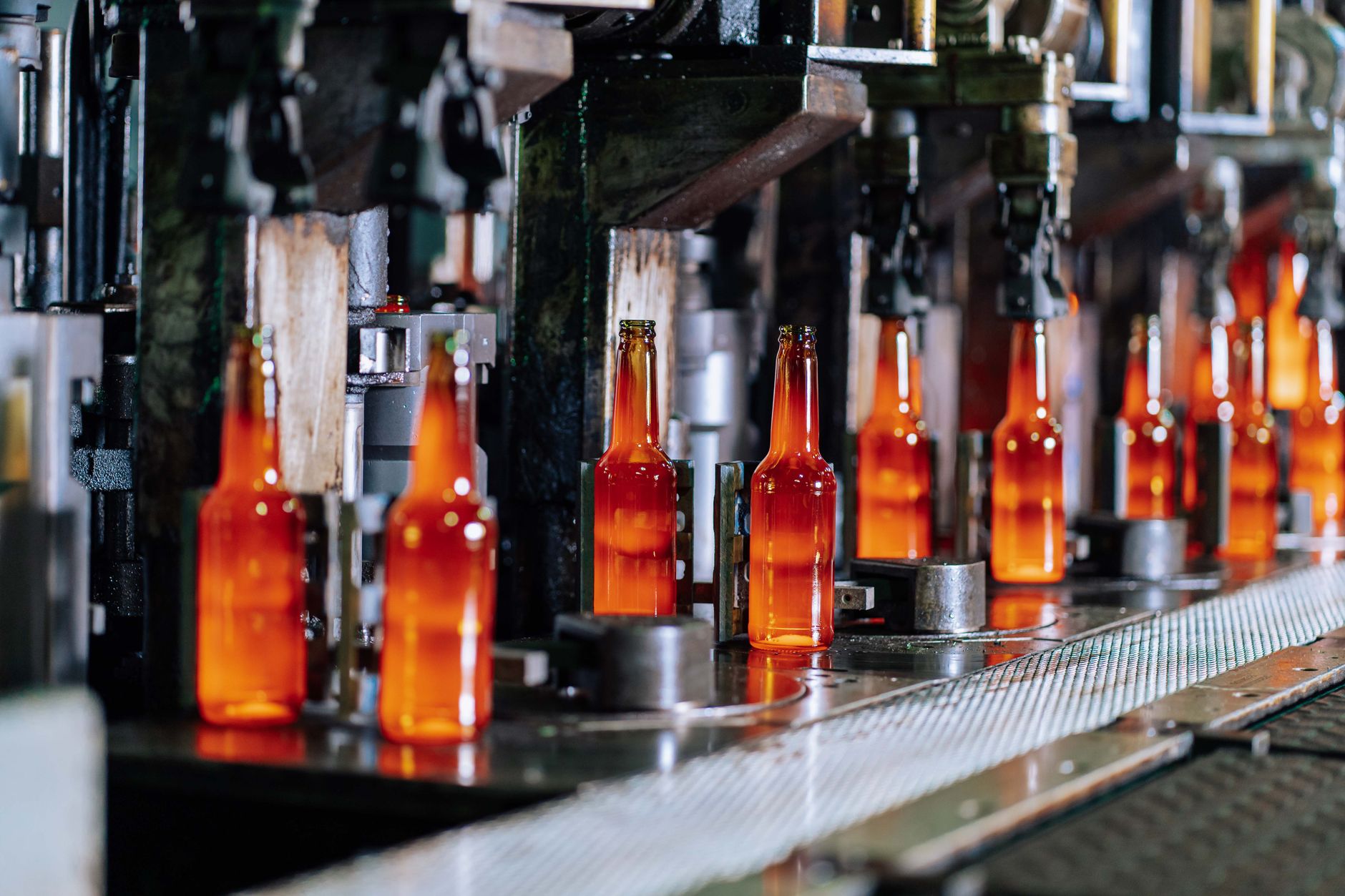
Whether you’re a marketing agency briefing a new campaign, a reseller managing client expectations, or a business trying to stretch a merchandise budget further, the question of where your promotional products are actually made has never been more relevant. Promotional product manufacturing trends — particularly the ongoing debate around onshore vs offshore production — are reshaping how Australian organisations source, spec, and purchase branded merchandise in 2026. From rising freight costs and sustainability pressures to quality concerns and lead time unpredictability, there’s a lot at play. This guide breaks down the key trends, what they mean in practical terms, and how to make smarter sourcing decisions for your next campaign.
Understanding the Onshore vs Offshore Divide in Australian Promotional Merchandise
To understand where the industry is heading, it helps to understand where it has been. For decades, the Australian promotional products sector has relied heavily on offshore manufacturing — predominantly from China, but also from Bangladesh, Vietnam, India, and other South-East Asian countries. The appeal was straightforward: significantly lower per-unit costs, vast production capacity, and a well-established supply chain infrastructure built specifically for high-volume merchandise.
Onshore manufacturing in Australia, by contrast, has traditionally been a niche offering. Higher labour costs, limited factory capacity, and fewer specialist decoration facilities meant that locally made promo products were typically reserved for specific product types — custom print runs, specialised packaging, or products where short lead times were absolutely critical.
But that picture is changing. In 2026, a combination of economic, environmental, and logistical pressures is driving genuine interest in domestic production — and simultaneously forcing offshore suppliers to raise their game.
Why Offshore Still Dominates Volume Orders
Let’s be honest: for the bulk of promotional product categories, offshore manufacturing still wins on price. A 500-unit order of custom branded water bottles with pad printing from an offshore supplier will, in most cases, come in at a fraction of the equivalent cost from a domestic producer. The same is true for promotional USB flash drives, tech accessories, tote bags, drinkware, and large-format apparel runs.
Offshore suppliers have also invested significantly in quality control infrastructure over the past decade. Many major Chinese factories now operate to international quality standards and maintain dedicated export teams capable of managing Australian compliance requirements. For resellers placing regular bulk orders, these relationships can be highly efficient and reliable — provided you factor in lead times correctly.
The core advantage of offshore manufacturing remains cost-per-unit, particularly at higher MOQs. If you’re sourcing personalised corporate gifts for a national campaign or branded swag for a large conference, offshore procurement can make your budget work considerably harder.
Key Promotional Product Manufacturing Trends Reshaping the Industry
So what’s actually changing? Several converging trends are disrupting the traditional onshore vs offshore calculus, and understanding them is critical for any business or agency managing promotional merchandise in Australia right now.
1. Supply Chain Volatility Is Forcing a Rethink
The post-pandemic supply chain disruptions of the early 2020s left a lasting mark on the promotional products industry. Delayed shipments, unexpected port closures, and freight cost spikes turned what used to be reliable 6–8 week offshore lead times into unpredictable 12–18 week nightmares for many importers. Even as global supply chains have partially stabilised, the memory of those disruptions has made businesses and resellers more cautious.
As a result, many organisations are now actively exploring dual-sourcing strategies — maintaining offshore relationships for planned campaigns while identifying onshore or near-shore options for time-sensitive or urgent orders. For events like orientation week activations in Brisbane or hackathons across Australia, where deadlines are non-negotiable, having a domestic production backup can be the difference between delivering on time and missing the moment entirely.
2. Sustainability Pressures Are Elevating Onshore and Ethical Offshore
Environmental accountability is no longer a nice-to-have for many Australian organisations — particularly government bodies, universities, and large corporates. Procurement policies are increasingly factoring in carbon footprint, ethical labour standards, and supply chain transparency.
This is creating meaningful demand for two distinct product types:
- Domestically produced or Australian-designed merchandise with verifiable local economic impact
- Certified ethical offshore production with credible environmental credentials (OEKO-TEX, GOTS, recycled material certifications, etc.)
Products like eco-friendly branded seed kits and sustainably sourced apparel are benefiting directly from this shift. The trend also extends to packaging — premium branded packaging with embossing and foil finishes sourced from certified suppliers is increasingly preferred over unverified commodity alternatives.
3. Onshore Decoration Is Filling the Gap
One of the more nuanced manufacturing trends in Australia is the growth of onshore decoration applied to offshore blank products. Rather than manufacturing entirely in Australia (which remains cost-prohibitive for most product categories), a growing number of Australian suppliers are importing quality blank product and completing the decoration locally — whether that’s screen printing, embroidery, laser engraving, or sublimation.
This hybrid model offers real advantages. It reduces per-unit production costs while keeping the decoration stage domestic, enabling faster turnarounds, easier artwork revisions, and tighter quality control on the branded output. For a Perth business sourcing merchandise through WA promotional product suppliers, working with a local decorator on imported blanks can strike the right balance between cost and responsiveness.
Our guide to choosing screen printing for promotional products covers in detail why the decoration method choice matters as much as where the blank product originates — and it’s worth reviewing before you brief any supplier.
4. Rising Minimum Order Quantities Are Pushing Buyers Offshore
Here’s a counterintuitive trend: as onshore production costs rise, domestic manufacturers are often increasing their MOQs to maintain margin, which is ironically pushing smaller buyers towards offshore options. A small sporting club needing 50 custom varsity jackets or a school ordering a short run of branded apparel may find domestic options simply unviable at that volume.
This is particularly relevant for boutique campaigns, seasonal gifts like Mother’s Day promotional items or Father’s Day branded gifts for suppliers, and event-specific merchandise such as webinar promotion swag where quantities are inherently limited.
5. Transparency and Traceability Are Becoming Differentiators
Increasingly, clients — especially enterprise and government — are asking suppliers to demonstrate exactly where their products are made, under what conditions, and with what materials. This transparency push is creating a competitive advantage for suppliers who can provide clear chain-of-custody documentation.
This trend aligns directly with the growing interest in industry statistics and benchmarking data around promotional products, as organisations seek to make evidence-based sourcing decisions rather than relying on habit or tradition.
Practical Sourcing Strategies for Businesses and Resellers
Understanding the trends is one thing — applying them to your actual procurement decisions is another. Here’s how to think about the onshore vs offshore question in practical terms.
Match Sourcing to Campaign Type
Not every campaign has the same requirements. A high-volume, planned-in-advance national campaign with a 12-week lead time is perfectly suited to offshore manufacturing. A regional event with a 3-week deadline needs domestic or hybrid options. Match your sourcing strategy to your campaign’s specific constraints rather than applying a one-size-fits-all approach.
Budget for Hidden Offshore Costs
Offshore pricing can be deceptive. Always factor in freight, customs duty, import taxes, currency exchange risk, quality inspection fees, and the cost of potential reorders for defects. For example, sourcing promotional cosmetic bags in Melbourne from a local supplier might look more expensive on a per-unit basis until you account for all the landed costs of an offshore equivalent.
Interrogate Sustainability Claims
The promotional products industry has seen its share of greenwashing. If a supplier claims their offshore products are eco-friendly, ask for specific certifications. Check whether materials like recycled PET, organic cotton, or bamboo are independently verified. The same scrutiny applies to promotional food items — branded muesli bars for school canteens or branded salt and pepper sets for café tables should come with clear ingredient and sourcing documentation.
Understand the ROI of Quality
Cheaper isn’t always better in promotional merchandise. A low-cost item that breaks or looks poor reflects badly on the brand it represents. Research consistently shows that higher-quality branded products generate better brand recall and sentiment. For context, our breakdown of promotional drinkware ROI data in Australia illustrates clearly how quality correlates with campaign effectiveness — a lesson that applies across categories.
Leverage Onshore for Niche and Custom Products
For truly bespoke items — custom vintage tees with specialist print finishes, premium golf club uniforms, or limited-edition event pieces — domestic producers often offer superior outcomes in terms of customisation capability, artwork support, and finish quality. These are the moments where paying a premium for onshore capability makes genuine commercial sense.
Conclusion: Navigating Promotional Product Manufacturing Trends in 2026
The onshore vs offshore debate in promotional product manufacturing isn’t a binary choice — it’s a spectrum, and the smartest players in the industry are learning to navigate it strategically. The major promotional product manufacturing trends of 2026 point towards a more nuanced approach: offshore for volume and cost efficiency, onshore decoration for speed and quality control, and ethical certification as a baseline expectation regardless of where production occurs.
Here are the key takeaways for businesses, resellers, and marketing agencies:
- Supply chain resilience matters — diversify your sourcing options and build in contingency for time-sensitive campaigns
- Hybrid production models are growing — onshore decoration of offshore blanks can offer the best of both worlds
- Sustainability expectations are rising — clients and procurement teams increasingly expect verifiable credentials, not vague eco-claims
- Total landed cost beats unit price — always calculate the full cost of offshore procurement before comparing it to domestic alternatives
- Match your sourcing to your campaign type — high-volume, planned campaigns suit offshore; urgent, bespoke, or high-profile work often justifies onshore or hybrid approaches
The landscape is shifting, and staying informed about these trends gives you a genuine competitive edge in the Australian promotional products market.